Most people don’t realize they’re underpaid until they switch jobs. Here’s why loyalty hides salary gaps and how to check your real market worth.
Most People Don’t Know They’re Underpaid Until They Switch Jobs
Most working professionals believe they’re paid fairly not because they’ve checked, but because they’ve never seen a clear comparison.
In reality, many people discover the truth about their salary only after switching jobs. By then, the gap has already grown quietly over the years.
Why Underpayment Is So Hard to Notice
Salary rarely drops. It increases slowly, predictably, and just enough to feel acceptable. That’s what makes underpayment dangerous it hides in plain sight.
Most people judge fairness using:
- Annual increments
- Company performance reviews
- Internal comparisons
- Years of loyalty
What they *don’t* compare against is the real market.
The Moment Reality Hits
For many, the realization comes during a job switch.
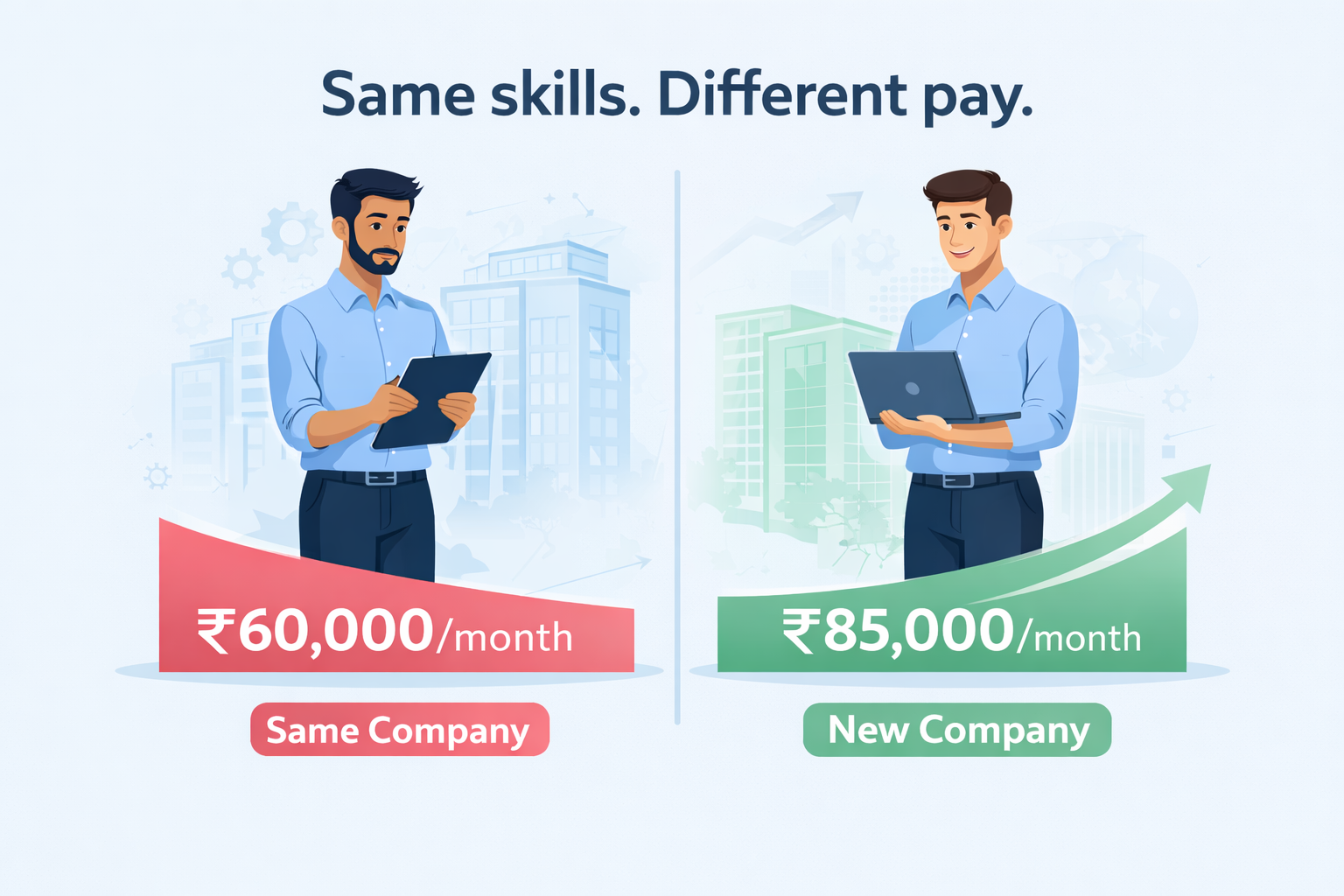
Same role. Same experience. Same skills.
But suddenly:
- 20–40% higher salary
- Better benefits
- Stronger role clarity
That’s when people ask: “Was I underpaid all this time?”
Why Loyalty Often Works Against You
Companies optimize for stability. Market salaries move faster than internal increments.
This creates a gap where:
- New hires earn more than existing employees
- Market rates outpace yearly raises
- Long-term employees fall behind quietly
This doesn’t mean companies are evil. It means salary systems reward movement more than consistency.
The Hidden Cost of Staying Too Long
The cost isn’t just money. It’s delayed growth, weaker negotiation leverage, and reduced confidence.
By the time someone realizes they’re underpaid, they’re often:
- 2–3 years behind market pay
- Undervaluing their skills
- Negotiating from a weaker position
Why Most People Never Check
Checking salary fairness feels uncomfortable.
It forces hard questions:
- Am I really valued?
- Did I wait too long?
- Should I have moved earlier?
So people avoid the comparison altogether.
How to Know Before It’s Too Late
You don’t need to quit your job to understand your worth. You need context.
Salary fairness depends on:
- Your role
- Your experience
- Your skills
- Your location
- Your company size
Without comparing these against the market, fairness is just an assumption.
A Better Way to Check
That’s why I built FairPayCheck a simple, anonymous way to understand where you stand.
It doesn’t require your name, employer, or email. It only looks at factors that actually affect pay.
👉 Check your real market pay on FairPayCheck
Final Thought
Most people aren’t underpaid because they’re bad at their job. They’re underpaid because they never saw the full picture.
Clarity changes everything even if you decide to stay.
This article reflects personal experience and market observations. Results are estimates and should be used as one input, not financial advice.
Want to check if you're being paid fairly?
Try FairPayCheck →This article is for educational and informational purposes only.